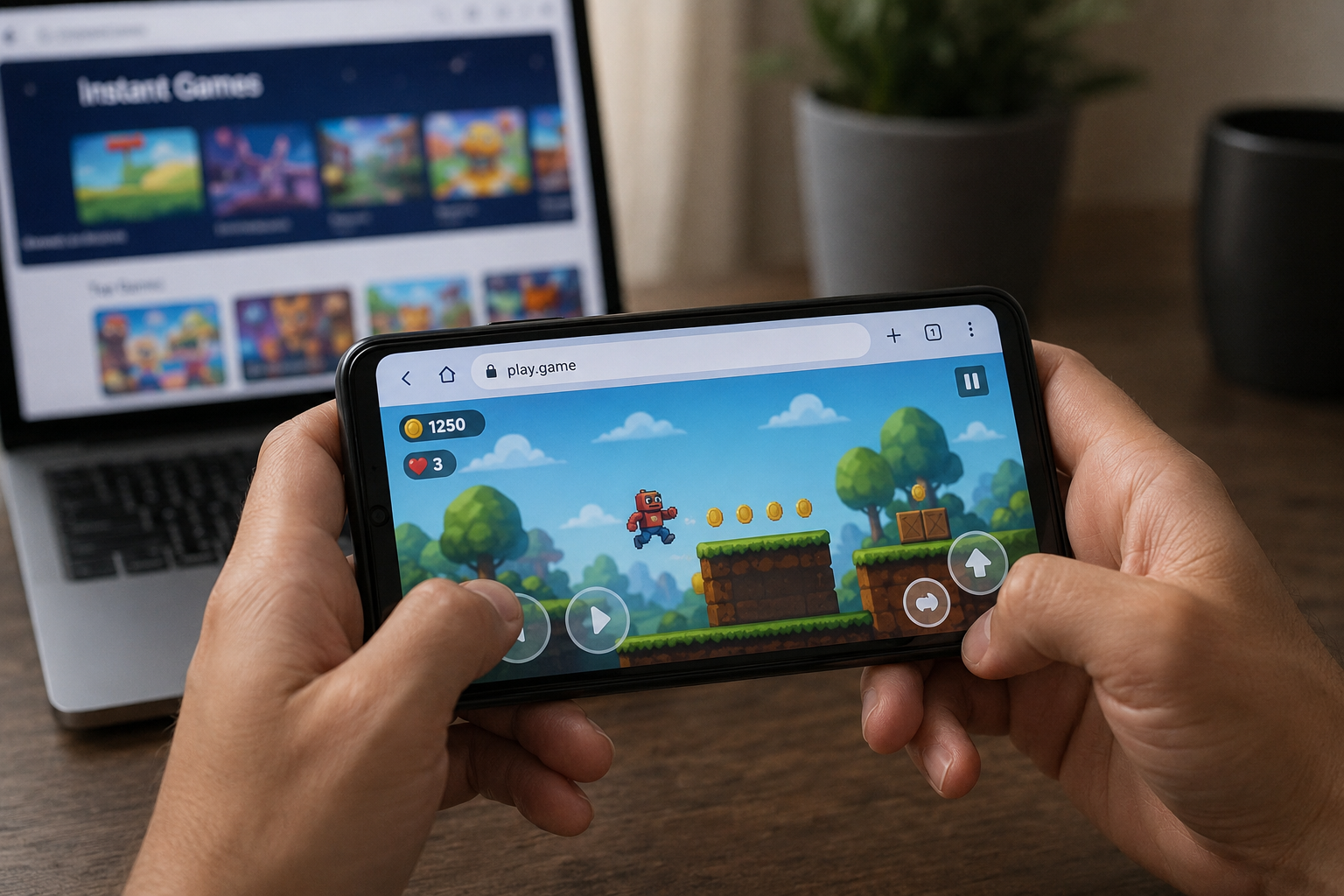
For more than a decade, the path to releasing a game looked fixed. You built a mobile app, you submitted it to Apple’s App Store and Google Play, you handed over a thirty percent cut of every sale, and you spent a fortune buying installs to climb the rankings. That arrangement made the two stores the undisputed gatekeepers of mobile gaming. But something is shifting. A wave of browser-based and instant games, playable in one tap with no download, is offering studios a way around the gatekeepers entirely, and the economics behind the move are getting harder to ignore.
The thirty percent problem
At the heart of this shift sits a single, much-resented number: the thirty percent commission that both Apple and Google take on transactions inside their stores. For years developers treated this as an unavoidable cost of doing business, grumbled about, but accepted. That acceptance is now unraveling. In an environment where margins are tight and every percentage point matters, handing nearly a third of revenue to a platform has become a strategic problem rather than a routine expense.
The commission is only half the pain. The other half is user acquisition. Discovery algorithms on the major stores systematically favor publishers with large advertising budgets, which puts a ten-person studio at a structural disadvantage against companies that can spend millions to buy their way to the top of the charts. The blended cost of acquiring a paying customer has risen so sharply that many portfolios with a dozen titles struggle to turn a profit at all. Add the slow, unpredictable store review process and the friction of asking a player to download a large app before they have played a second of it, and the traditional model starts to look less like a highway and more like a toll road with traffic jams.
Play first, install never
The alternative is refreshingly simple. Browser and instant games are built on open web technologies, chiefly HTML5 and WebGL, and they run the moment a player taps a link. There is no store approval, no multi-gigabyte download, no installation, no waiting. The game simply loads in a browser tab or directly inside an app the player already uses.
This inverts the entire mobile funnel. The old model asked a player to commit first, downloading and installing an app on the promise of fun to come. The instant model lets them play first and decide later, which removes the single biggest point at which potential players give up. For casual and mid-core games especially, that difference in friction translates directly into more players and more revenue. And because the same HTML5 build runs across phones, tablets, desktops, and even smart TVs, a studio maintains one cross-platform version instead of separate native apps, compressing both development time and cost.
The technology finally caught up
Browser gaming is not new, and earlier attempts stumbled badly. The death of Flash left a hole, and for years the web was dismissed as a home for throwaway mini-games while serious development moved to native engines. What changed is that the underlying technology finally matured. Modern WebGL, the emerging WebGPU standard, and WebAssembly now let browser games deliver graphics and performance that approach native quality, riding on the same hardware advances that the wider tech boom produced. Progressive Web App technology even lets a web game be saved to a home screen and behave much like an installed app, blurring the line between web and native.
The major engines have noticed. Unity has poured significant resources into better mobile browser support, wading into a space that was long fragmented across smaller specialist engines. That investment is a strong signal that the web is being taken seriously again as a primary platform rather than an afterthought.
Chat apps are the new arcades
The most striking development is where these games are being played. Instant games increasingly live not on the open web but inside the messaging and social apps people already spend hours in every day. Telegram, with its Mini Apps platform reaching hundreds of millions of users, has become a genuine gaming destination, and Discord, TikTok, and others are racing in the same direction. These platforms are leaning into games deliberately, because games keep users inside their walls, and they offer their own integrated payment and advertising systems as an alternative to the app store tills.
This mirrors a model that has thrived in Asia for years, where super-apps host enormous ecosystems of instant minigames. The West is now catching up, with chat and social apps starting to resemble those thriving minigame economies. For a developer, a viral game inside a messaging app carries a built-in distribution engine: players invite their friends directly, and growth can happen without a paid acquisition budget at all.
New ways to make money
The obvious worry is monetization. If you are not selling through the app store, how do you get paid? The answer is that web games monetize differently, but they do monetize. Rewarded video ads, where a player voluntarily watches a short clip for an in-game bonus, remain a reliable earner and are strongly preferred by players over forced ads. In-app purchases work through web payment gateways that take only a few percent rather than thirty, dramatically improving the margin on every sale.
This has given rise to one of the most important tactics in the business: the web shop. Even big mobile studios now run external online stores where players buy currency and items directly, deliberately routing purchases outside the app to escape the platform commission. What started as a marginal experiment has become a mainstream strategy for protecting margins. Beyond that, studios can license a single game to many web portals at once, sell sponsorships, or tap the developer grants that platforms hungry for content are handing out. Distribution aggregators bundle thousands of games and place them everywhere from web portals to in-flight entertainment systems.
A complementary channel, not a total replacement
It would be a mistake to declare the app store dead. Browser games still face real limits. Heavy 3D titles, sprawling open worlds, and complex physics often cannot run well in a browser, and even casual games need careful optimization to perform smoothly. The store-based model remains dominant for large, premium titles, and most studios will continue to ship there.
The smartest framing is that instant and browser games are a complementary channel rather than a wholesale replacement. They address the specific pains of the current moment: rising acquisition costs, slow store reviews, the thirty percent tax, and catalogs of older games sitting unused. A studio can port an existing mobile title to the web in a matter of weeks, open a new distribution front inside chat apps, and funnel its most valuable players to a web shop, all without abandoning its store presence.
The deeper point is that the web is returning to the heart of the games industry after a long exile. Regulatory pressure on Apple and Google is prying the payment ecosystem open, the technology has finally caught up, and platforms everywhere are desperate to escape the duopoly’s grip. For developers who have spent a decade paying the toll and fighting for visibility, the appeal of a game that loads in a single tap, reaches players anywhere, and keeps far more of its revenue is obvious. The gatekeepers are no longer the only way in.
Comments are closed